These days, almost everyone takes their dog for walks using a proper leash. Many pet owners prefer slightly longer leashes because they feel it gives their dog more freedom to explore. A longer leash also means you don’t have to watch your dog every second, allowing them to roam within a set range while you enjoy a bit of personal space. While this feels more relaxed for both the dog and owner, there’s a catch: if the leash is too long, your dog may move outside your control range, and you could struggle to intervene in case of danger.
So, what is the ideal leash length? As a manufacturer of dog leashes, we can tell you that longer is not always better. If you’re walking in a spacious, quiet area with little foot or vehicle traffic, a longer leash is usually fine. Your dog gets more freedom, and you can still relax and enjoy your walk.
But for most pet owners living in cities, streets are crowded, and it’s harder to control a dog on a long leash. Imagine a car suddenly approaching; if the leash is too long, it takes longer to pull the dog back, and dangerous situations become harder to prevent.
There isn’t a single “perfect” length, but you can choose a safe and comfortable range based on your dog’s size and your walking environment.
Everyday City Walks: 4–5 Feet Works Best
For most city-dwelling pet owners, a leash around 4 to 5 feet (roughly 1.2–1.5 meters) strikes the right balance between giving your dog space to explore and keeping them within your control.
- Small dogs: Breeds like Toy Poodles or Bichons do well with 4–4.3 feet (about 1.2–1.3 meters). Longer leashes can tangle easily.
- Medium dogs: Breeds like Corgis or Shiba Inus can have 4.3–5 feet (1.3–1.5 meters), giving them a little more freedom.
- Large dogs: Breeds like Golden Retrievers or Labradors benefit from 4.5–5 feet (1.4–1.5 meters), enough space to move comfortably while still under control.
Adjusting Leash Length for Different Situations
In general, leash length should only extend slightly beyond your controlled range—enough to let your dog move but still respond quickly when needed. Leash manufacturers strongly advise against casually switching to a much longer leash, as this can lead to safety risks.
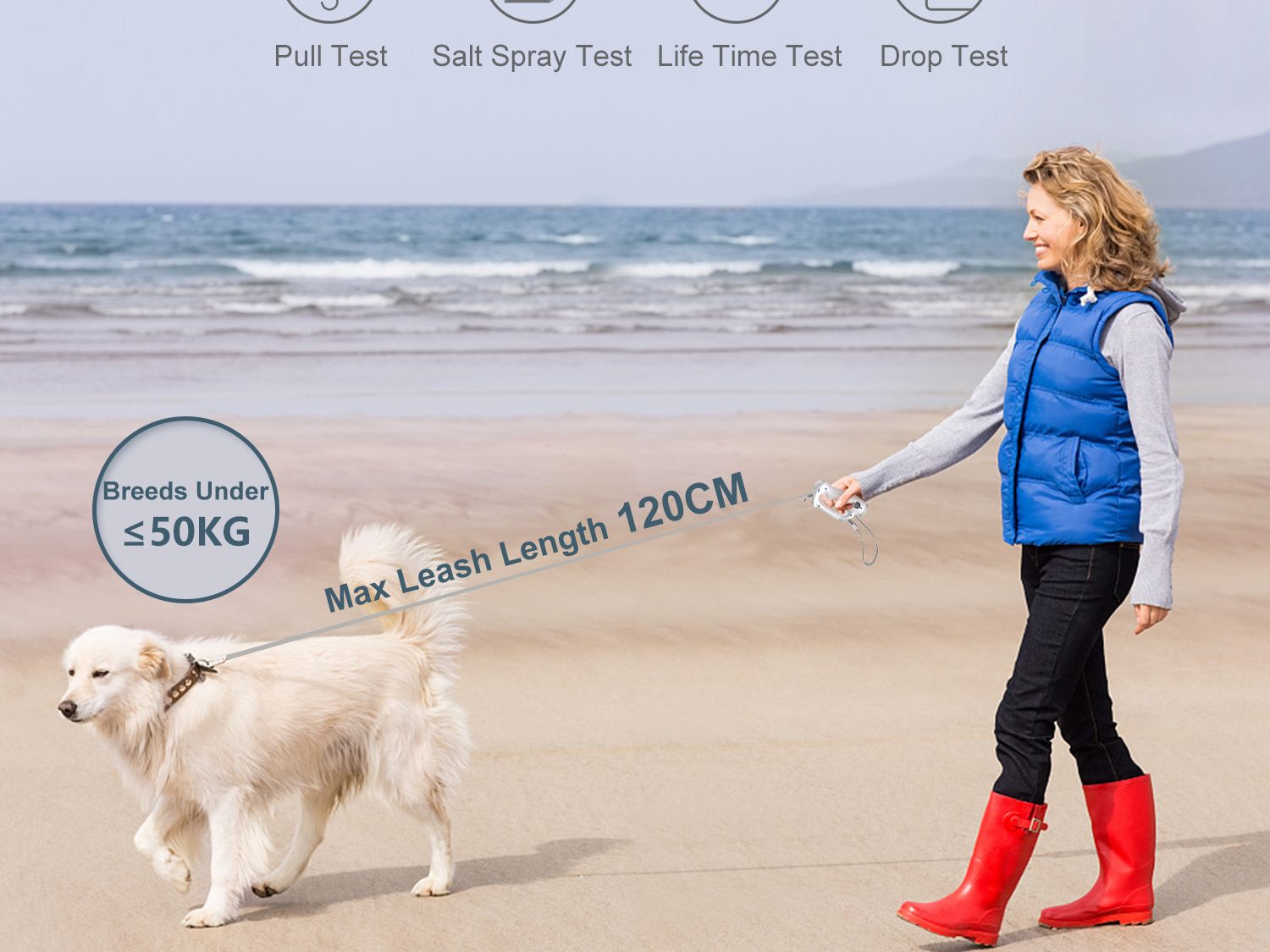
- Busy streets with traffic or crowds: A shorter leash, around 3.5–4 feet (about 1.1–1.2 meters), keeps your dog close, making it easier to prevent sudden lunges and reducing the impact on you if the dog pulls.
- Open parks or suburban areas: Longer leashes of 10–16 feet (3–5 meters), like retractable leashes, allow your dog to roam and explore safely.
- Training walks: Very short leashes, around 2.5 feet (80 cm), keep your dog’s head near your side, ideal for obedience or heel training.
Leash Type Matters, Too
- Fixed leash: Most common and reliable for daily walks. Provides strong control.
- Retractable leash: Offers freedom, perfect for energetic dogs in open spaces. However, be cautious—retractable leashes can make it harder to stop your dog quickly in emergencies.
- Harness vs. collar: Daily walks are generally safer with a harness, which spreads pressure and is gentler for dogs prone to sudden lunges. Collars are better suited for well-trained dogs.
In summary, the best leash length is not universal. Choose a length that keeps your dog safely within your control while giving them enough room to explore. Remember: don’t casually switch to a much longer leash just because it feels freeing. Safe, responsible leash management is key to enjoyable walks for both you and your dog.